
Abatement Technologies Air Duct Cleaning in Columbus: A Homeowner’s Guide
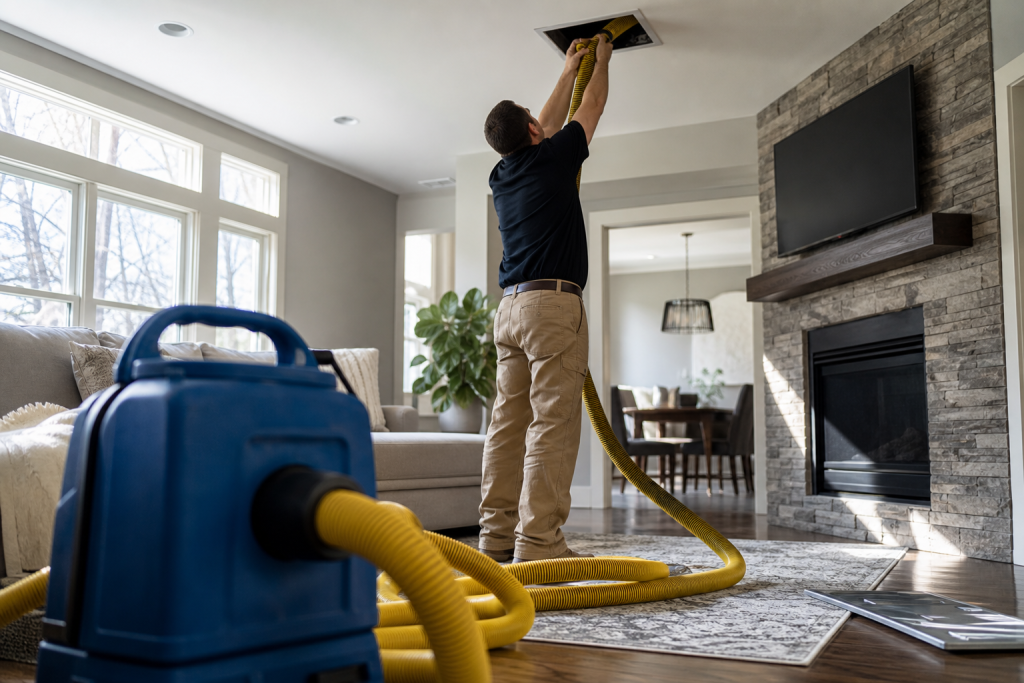
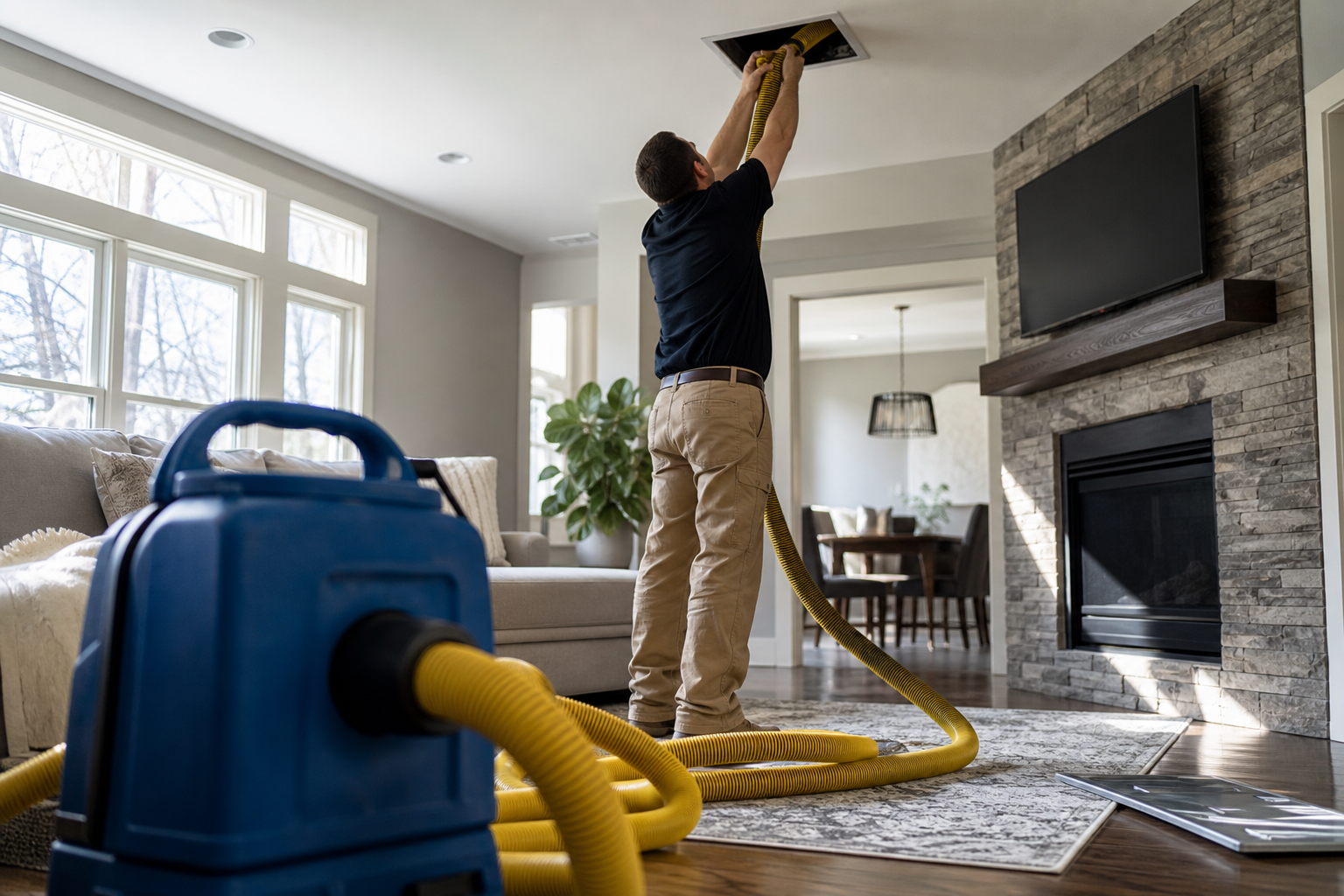
Abatement Technologies air duct cleaning in Columbus uses industrial-grade HEPA vacuum systems originally engineered for asbestos and lead remediation, delivering filtration standards that residential equipment can’t match. A contractor running Abatement Technologies equipment is pulling debris through true HEPA filtration at the vacuum source, not exhausting fine particles back into your living space through a standard shop-vac or leafblower-grade setup. If you’re evaluating duct cleaning companies in Columbus and want to know what equipment actually matters, call Matrix Air Duct & Vent Cleaning Ohio at (833) 991-6689 — we’ll walk you through what we’re running on your job before we book it.
Why Most Homeowners Never Ask What’s Inside the Hose
Most homeowners have no idea what equipment is inside the hose being fed into their ducts — and most companies prefer it that way. We’ve been in this trade 11 years, and we’ve lost count of the Columbus homes where a previous “cleaning” left the ducts looking worse than when they started. The tell? A vacuum unit sitting in the driveway that looks like it came from a hardware store rental shelf.
Here’s what happens when you don’t ask: a crew shows up with a rotary brush on a flexible cable and a vacuum with standard filtration. They agitate the debris, the vacuum sucks up the big stuff, and the fine particulate — mold spores, dust mite fragments, combustion soot — gets pushed through the filter and recirculated through your home. In Columbus, where we see heavy pollen loads in spring and furnace particulate buildup through long Ohio winters, that recirculation matters.
Abatement Technologies builds equipment for industrial hygienists and remediation contractors. Their HEPA-AIRE and Predator series vacuums were designed for environments where missing a particle could violate federal abatement standards. When that same engineering shows up on a residential duct cleaning job, the filtration standard isn’t “good enough for a house” — it’s “certified safe for hazardous material removal.”
What Abatement Technologies Equipment Is Actually Built For
Abatement Technologies didn’t start in residential HVAC. The company built its reputation on negative air machines and HEPA vacuums for asbestos abatement, lead paint remediation, and mold containment — work where EPA and OSHA compliance isn’t optional and equipment failure can shut down a job site.
That pedigree matters for duct cleaning in three specific ways:
- Source-capture HEPA filtration: Unlike add-on HEPA filters that sit at the exhaust, Abatement Technologies units pull air through HEPA media at the vacuum chamber. What goes in stays in — 99.97% of particles 0.3 microns and larger.
- Sealed containment design: These machines are built for negative-pressure containment zones. Every gasket, hose fitting, and filter seal is engineered to prevent bypass — because in abatement work, a leak means a containment breach.
- Verified airflow performance: CFM ratings on abatement equipment are tested under loaded conditions, not ideal lab specs. A Predator 750 rated at 750 CFM delivers that airflow with a loaded filter, not just when the HEPA is brand new.
We run Nikro and Rotobrush equipment on certain residential jobs where it fits — both solid brands with their place. But when we’re dealing with post-remediation cleanup, heavy construction dust, or Columbus homes with decades of accumulated debris, the Abatement Technologies HEPA-AIRE line is what we bring. The owner is on the job, and I’m not risking my reputation on equipment that might let fine particulate walk back into someone’s nursery.
HEPA at the Source: Why Vacuum Location Matters More Than You Think
This is the detail that separates professional-grade duct cleaning from a coupon special: where the HEPA filter sits in the airflow path.
Standard residential duct cleaning setups — the kind we see competitors running around Columbus — typically use a portable vacuum with a pleated filter or bag, sometimes with a HEPA exhaust filter added as an aftermarket accessory. The problem is airflow path. Debris enters the vacuum, passes through the collection chamber, and then gets pushed through whatever final filtration exists before exhaust. Any leak in the collection chamber, any gasket degradation, any hose fitting that isn’t perfectly sealed — and particulate escapes before it ever reaches that final filter.
Abatement Technologies HEPA-AIRE units are designed as negative air machines first. The HEPA filter is the primary barrier, not an afterthought. Air passes through HEPA media before reaching the blower motor and exhaust pathway. In practical terms: if the machine is running, the HEPA is filtering. There’s no bypass path around it.
For Columbus homeowners with asthma, allergies, or recent renovation work, this isn’t technical trivia. We cleaned a system last month in German Village where the previous cleaner had run a standard vacuum for three hours. The homeowner’s air quality monitor spiked PM2.5 readings for two days afterward. We re-cleaned with source-capture HEPA, and the monitor flatlined — that’s the difference between filtration as a feature and filtration as engineered function.
Reading the Specs: CFM, Water Lift, and What They Mean in Your Ducts
Equipment specs on a brochure don’t mean much without context. Here’s how to read the numbers that matter for duct cleaning:
- CFM (cubic feet per minute): This is airflow volume. For residential duct cleaning, you want sustained CFM in the 500–1,000 range under working load — not peak CFM with a clean filter. Abatement Technologies publishes loaded-filter performance, which is why their Predator 750 specs hold up in real Columbus jobs where we’re pulling heavy debris for hours.
- Water lift (inches H₂O): This measures suction strength — the vacuum’s ability to pull against resistance. Long duct runs, multiple bends, and clogged returns all increase resistance. Industrial units like the HEPA-AIRE PAS2400 run water lift numbers that keep pulling when residential equipment would stall out.
- Filter surface area: More square feet of HEPA media means longer run time before loading reduces performance. Abatement Technologies machines use oversized filter banks specifically to maintain airflow through long abatement shifts — which translates to consistent performance through a full day of residential work.
The bottom line: a $49 duct cleaning special isn’t running equipment with these specs. The machine alone costs more than several years of coupon-service revenue. When a Columbus contractor quotes professional-grade pricing, part of what you’re paying for is equipment that performs to measurable standards, not just “strong suction.”
Why Professional-Grade Equipment Changes the Pricing Equation
We get asked regularly why duct cleaning quotes vary so widely in Columbus — from $89 Groupon deals to $600+ for what seems like the same service. The equipment roster is a major piece of that puzzle.
An Abatement Technologies HEPA-AIRE PAS2400 runs roughly $4,500–$6,000 depending on configuration. The HEPA filter set for a full remediation job can cost $200–$400 per changeout. Compare that to a shop-vac conversion with a HEPA exhaust filter: under $500 total investment, filters under $30, and no specialized maintenance protocol.
That cost structure shows up in service delivery. The low-bid operator can afford to run fast, skip pre-filter changes, and replace equipment annually when it wears out. The contractor running Abatement Technologies has real capital invested, maintenance schedules to maintain certification-adjacent performance, and a business model built on repeat customers who can tell the difference.
We’ve been at this 11 years focused on one trade. Our equipment investment — Rotobrush for residential agitation, Nikro for dryer vent work, Abatement Technologies for heavy-duty and post-remediation jobs — reflects that focus. We’re not trying to be the cheapest call in Columbus. We’re trying to be the call you make once, then recommend to your neighbor.
Five Questions to Ask Any Columbus Duct Cleaner About Their Equipment
Before you book, get specific. Any contractor running legitimate professional equipment will answer without hesitation:
- “What vacuum brand and model do you run?” Vague answers like “commercial-grade HEPA” without naming the manufacturer are red flags. Abatement Technologies, Nikro, and Rotobrush are all nameable brands with verifiable specs.
- “Is your HEPA filtration at the source or exhaust?” Source-capture HEPA is the industrial standard. Exhaust-only HEPA can be bypassed through the collection chamber.
- “What’s your CFM under loaded conditions?” Peak CFM with a new filter means nothing. Ask for working-load numbers.
- “Do you own this equipment or subcontract with rented gear?” Owner-operated means accountability. We’ve seen subcontract crews in Columbus show up with equipment the “company” didn’t know was broken.
- “Can I see the unit before you start?” A technician proud of their equipment — and we are — will show you the filtration setup, explain the airflow path, and demonstrate seal integrity. Someone hiding a shop-vac in a branded van won’t.
We pulled a system in Clintonville last year where the homeowner had asked these exact questions of three companies. Two hung up or deflected. We walked her through our HEPA-AIRE setup on the driveway, showed her the pre- and post-filter condition, and she booked on the spot. Clean ducts are only part of the picture — transparency about how you get there matters too.
When to Call a Pro in Columbus
DIY duct inspection is fine for catching obvious issues — a disconnected return boot you can see from the basement, a vent cover that’s fallen off. But once you’re past visual checks, professional equipment becomes necessary. You can’t HEPA-vacuum a 30-foot main trunk with a household machine, and you can’t verify post-cleaning particulate levels without calibrated tools.
Call a pro when: you’ve had recent renovation work (especially drywall or flooring), you’re seeing dust accumulation on registers within weeks of cleaning, family members have unexplained respiratory symptoms, or your HVAC system is more than 15 years old and has never been properly cleaned. In Columbus, our freeze-thaw cycles and pollen seasons put extra load on systems — deferred maintenance compounds faster here than in milder climates.
Related services in Columbus: Air Duct Cleaning in Akron | Dryer Vent Cleaning in Akron | HVAC Cleaning in Akron
The Bottom Line
Abatement Technologies equipment in residential duct cleaning represents a fundamentally different approach than standard residential service — industrial containment engineering applied to the air your family breathes. For Columbus homeowners, the key takeaways are simple:
- Ask what equipment is actually running on your job — brand, model, and filtration location
- Source-capture HEPA filtration prevents re-contamination; exhaust-only HEPA doesn’t guarantee it
- Professional-grade equipment costs more to own and operate, and that investment shows up in verifiable performance
- Equipment specs matter only when the technician operating them knows how to read your specific duct system
If you’re in Columbus and want an owner-operator who’ll show you the machine, explain the filtration path, and stand behind the work personally, Matrix Air Duct & Vent Cleaning Ohio offers free estimates — call (833) 991-6689. Joseph Taylor handles the jobs directly, and we’ll walk you through exactly what we’re running before we set foot in your home.
Frequently Asked Questions
Abatement Technologies equipment was originally engineered for hazardous material abatement — asbestos, lead, and mold remediation — where EPA and OSHA compliance requires verified HEPA performance and sealed containment. That same engineering means source-capture HEPA filtration that residential shop-vac conversions can’t replicate, with tested airflow performance under real working conditions rather than ideal lab specs.
In the Columbus market, thorough duct cleaning with professional-grade equipment typically runs $400–$700 for a standard single-system home, depending on duct complexity, accessibility, and contamination level. The $89–$149 specials generally use portable equipment without true source HEPA filtration and often involve upsell pressure once the crew is inside. Call (833) 991-6689 for an exact quote — estimates are free, and we’ll specify what equipment we’re bringing.
No — when operated by a trained technician. The concern with any high-CFM vacuum is proper pressure regulation and hose sizing for your duct material. Flex duct requires different handling than galvanized steel or fiberglass board. We’ve cleaned thousands of Columbus systems over 11 years without damage, because the owner is on the job and adjusts technique to the specific duct construction. If a contractor can’t tell you what type of duct you have, that’s your warning sign.
Equipment matters, but it’s not the only factor. The technician’s experience with your specific system type, their protocol for protecting your home during work, and their willingness to explain and show their process are equally important. We’ve seen great equipment operated poorly and adequate equipment used with real skill. In Columbus, look for a contractor who combines professional-grade tools — whether that’s Abatement Technologies, Nikro, or Rotobrush — with transparent process and verifiable customer feedback. See what 227 customers say about our work.
Written by Joseph Taylor, Owner & Lead Technician at Matrix Air Duct & Vent Cleaning Ohio, serving Columbus since 2015.
Need Air Duct Cleaning Help?
Call Matrix Air Duct & Vent Cleaning Ohio — licensed & insured, here with fast after-hours help in Ohio.
(833) 991-6689