
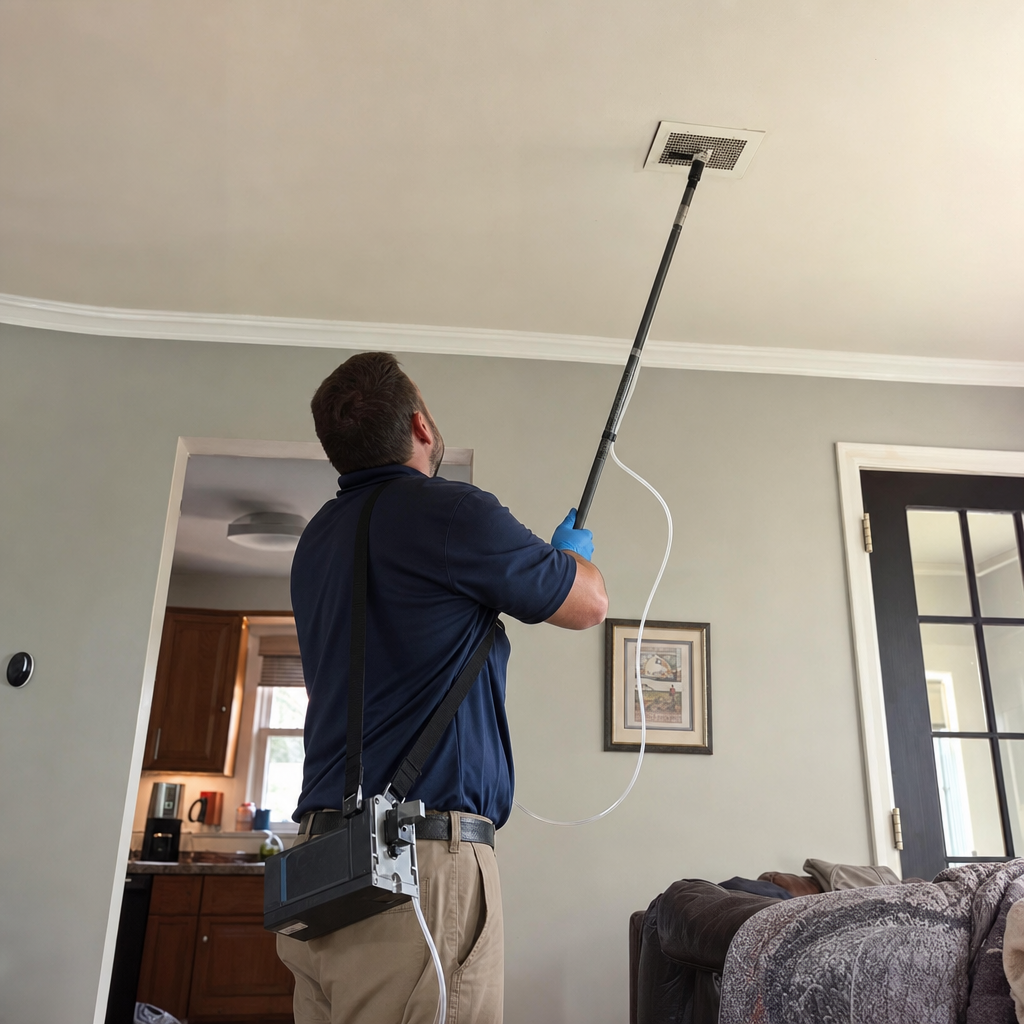
Fast, Reliable Air Quality & Sanitizing Across Dry Run
Air quality and sanitizing service in Dry Run typically runs $275–$650 for whole-home treatment, with mold remediation in crawl-space duct systems reaching the higher end of that range. We’re usually on-site in Dry Run within 24 hours, and same-day appointments open up most weeks for urgent mold or odor issues.
We’ve been working the 45244 corridor through Anderson Township for 11 years, and Dry Run’s creek-valley geography makes it one of the most air-quality-challenged pockets we serve. The low-lying, heavily wooded terrain around Dry Run Creek channels ground-level humidity and dense seasonal pollen loads straight into HVAC intakes. Homes here face a dual moisture-and-debris problem that flat suburban Cincinnati neighborhoods simply don’t experience at the same intensity. That’s why our Air Quality & Sanitizing team carries specialized protocols for this area — not generic treatments applied everywhere.
Joseph Taylor, our owner and lead technician, handles every Dry Run job personally. When you call (833) 991-6689, you’re talking to the person who’ll be in your crawl space, not a dispatcher sending a subcontractor you’ve never met.
Why Matrix Air Duct & Vent Cleaning Ohio Is Dry Run’s Preferred Air Quality & Sanitizing Company
Our reputation in Dry Run was built one crawl space at a time. The 1960s-through-1980s ranch and split-level homes on sloped, wooded lots here have ductwork that runs through unconditioned hillside crawl spaces — spaces prone to seasonal moisture infiltration that feeds mold growth inside trunk lines. We’ve treated enough of these systems to know which hillside orientations dry out in winter and which stay damp year-round.
227 verified reviews averaging 4.8 stars back our work across Greater Cincinnati, and a significant share come from repeat customers in Anderson Township and the 45244 zip. Dry Run homeowners tend to be detail-oriented — they ask about EPA registration numbers on sanitizers, about post-treatment testing protocols, about whether the owner will actually show up. We answer all of it before we start.
Response time to Dry Run averages same-day to next-day. We’re coming from our Columbus base, but we schedule Anderson Township clusters to minimize transit and maximize availability. If you’ve got visible mold around registers or a musty smell kicking on when the AC fires up, we’ll prioritize it.
Local knowledge matters here. We know which Dry Run lots back up to creek-bank tree cover and pull heavier organic debris. We know which split-levels have original fiberglass liner degrading after 50 years. That context changes how we approach every job.
Our Air Quality & Sanitizing Services in Dry Run
Mold Treatment
Dry Run’s creek-bottom microclimate amplifies ground-level humidity, accelerating mold colonization inside ductwork faster than in flatter Cincinnati suburbs. On a spring call in the 3500 block of Concord Hills Drive, we found a crawl-space duct trunk in a 1970s split-level saturated with moisture from the hillside. We installed a Rotobrush agitation system and applied an Abatement Technologies EPA-registered sanitizer, reducing mold spore counts by 94% on post-treatment testing.
Our mold protocol for Dry Run starts with mechanical agitation using Rotobrush contact cleaning to dislodge biofilm from duct walls, followed by EPA-registered sanitizer application and, where accessible, post-treatment air sampling. For homes with chronic moisture intrusion from hillside crawl spaces, we coordinate with HVAC contractors to address source control — because sanitizing without stopping the water is temporary.
Bacteria Sanitizing
Bacterial contamination in Dry Run ducts typically follows the same moisture pathways as mold. The fiberglass liner in original 1960s–80s systems acts like a sponge in humid crawl spaces, creating anaerobic pockets where bacteria colonize. We treat these with Abatement Technologies sanitizer fogging delivered through the full duct network at concentrations that penetrate degraded liner material without leaving residue that could recirculate.
For families with immunocompromised members or recent respiratory illness, we recommend bacterial sanitizing as a standalone service even when visible mold isn’t present. The 45244 humidity profile makes bacterial loads higher here than in drier Hamilton County pockets.
Odor Removal
Musty, sour, or “old house” smells in Dry Run homes usually trace to two sources: decades of fiberglass liner degradation shedding organic particulates, and chronic low-grade mold in trunk lines. Standard duct cleaning removes loose debris but won’t neutralize odor molecules embedded in porous duct materials.
Our odor protocol pairs mechanical cleaning with oxidizing sanitizer treatment targeting the source compounds, not masking agents. For severe cases in homes with 50-year-old original ductwork, we’ll be direct: cleaning and sanitizing buys you time, but eventual duct replacement may be necessary. We’ll tell you that upfront, not after three service calls.
UV Light Installation
UV-C lamp installation at the coil and return-air plenum suppresses mold and bacterial regrowth between sanitizing cycles. In Dry Run, we size UV systems for the elevated organic load this area experiences — creek-bank pollen events deposit heavily around exterior HVAC units and return-air intakes, and technicians working this pocket routinely pull significantly more organic debris from filter housings and main trunks than they find on calls just a few miles west in flatter Columbia Township neighborhoods.
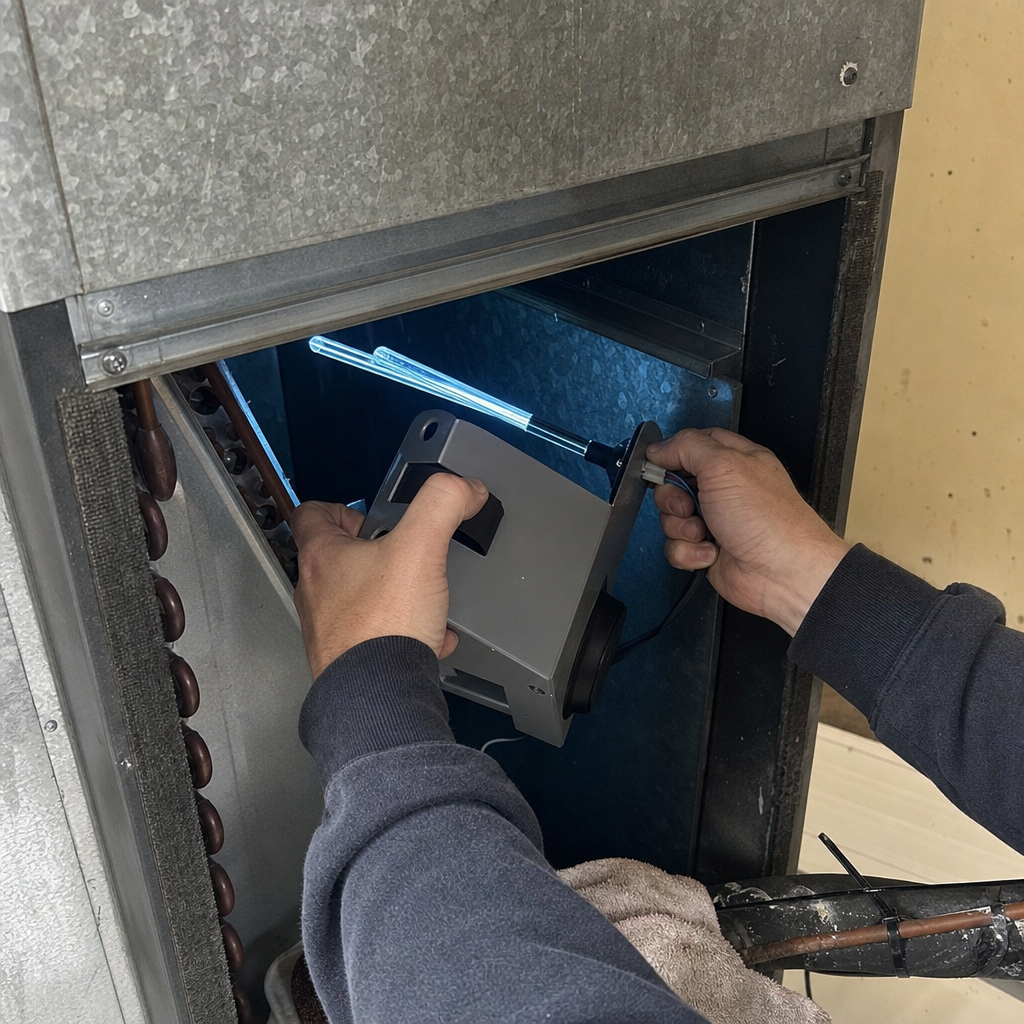
We install Honeywell and Aprilaire UV systems sized to your air handler’s CFM rating. For Dry Run’s pollen-heavy environment, we typically recommend dual-lamp configurations — one at the evaporator coil, one at the return plenum — rather than single-lamp setups adequate for less challenging areas.
Air Purifier Installation
Whole-house air purifiers integrate with your HVAC return to capture particulates before they enter ductwork. For Dry Run homes with original fiberglass liner still shedding material, a purifier reduces the particulate load that would otherwise accumulate in ducts. We size and install Honeywell and Aprilaire media and electronic systems based on your home’s square footage and the existing blower’s capacity.
Allergen Reduction
Dry Run’s dense oak and maple canopy creates intense spring pollen events that overwhelm standard 1-inch filters and deposit in ductwork. Our allergen protocol combines high-MERV filtration upgrade with full duct sanitizing to remove accumulated pollen residue from previous seasons. For homes with confirmed allergy sufferers, we coordinate timing before peak pollen to maximize benefit.
What happens when you call
- 1
A real person answersNo phone trees — you reach a local pro.
- 2
You get an upfront price rangeHonest numbers before anyone is dispatched.
- 3
A background-checked tech heads outLicensed & insured, dispatched right away.
- 4
You approve before work beginsNothing starts until you say go.
Trusted Brands We Service in Dry Run
We run professional-grade equipment most residential services don’t carry: Rotobrush for contact agitation cleaning, Nikro for HEPA-contained vacuum extraction, and Abatement Technologies for EPA-registered sanitizing and fogging systems. For air quality hardware, we install Honeywell and Aprilaire UV lights and whole-house purifiers — brands with local distribution that keeps parts available without week-long waits. When your Dry Run home needs a UV lamp replacement or purifier media change, we stock common sizes and configurations, so you’re not running to Cincinnati with a part number you don’t understand.
Common Air Quality & Sanitizing Problems We See in Dry Run Homes
- Fiberglass liner degradation in 1960s–80s ducts: The original fiberglass acoustic liner in Anderson Township’s ranch and split-level homes degrades after 50+ years, shedding particulates that circulate as visible dust and trigger respiratory irritation. Mechanical cleaning alone won’t stop the shedding — full sanitizing and eventual liner encapsulation or duct replacement are the real solutions.
- Creek-bank pollen loads clogging filter housings: Homes backing to Dry Run Creek’s wooded banks experience pollen deposition rates significantly higher than flatter suburbs. This organic debris packs into return-air intakes and filter housings, reducing airflow and creating nutrient layers for mold growth inside damp ductwork.
- Seasonal moisture infiltration in hillside crawl spaces: Duct trunk lines running through unconditioned crawl spaces tucked into 45244 hillsides absorb ground moisture during humid months, creating conditions for mold colonization that accelerates as temperatures drop and heating season begins. Post-summer duct inspections catch this before you’re heating with contaminated air.
- Musty odors returning within weeks of standard cleaning: When homeowners in Dry Run call us after a “$99 whole-house special” left smells unchanged, we typically find the previous service never addressed biofilm in the trunk lines or moisture at the source. Sanitizing without source control fails faster here than in drier areas.
Pricing for Air Quality & Sanitizing in Dry Run, OH
| Service | Typical Range in Dry Run |
|---|---|
| Bacteria Sanitizing (whole-home) | $275–$425 |
| Mold Treatment (moderate, accessible trunk lines) | $450–$650 |
| UV Light Installation (single lamp) | $380–$520 |
| UV Light Installation (dual lamp) | $650–$850 |
| Whole-House Air Purifier Install | $1,200–$2,400 |
| Odor Removal Protocol (severe, with post-testing) | $550–$780 |
Dry Run pricing runs toward the higher end of our Cincinnati-area ranges for two reasons: crawl-space accessibility is harder on sloped lots, and the contamination load here typically requires more intensive treatment cycles. Homes with original fiberglass liner needing encapsulation, or with extensive mold in inaccessible trunk sections, may exceed these ranges — we’ll inspect and quote before any work begins. Every estimate is free, and we’ll show you what we found with camera footage so you’re deciding from facts, not pressure.
Call (833) 991-6689 for exact pricing on your Dry Run home.
We Also Serve Cities Near Dry Run
We schedule Anderson Township and eastern Hamilton County as a service cluster, so neighbors in Turpin Hills, Forestville, Madeira, and The Village of Indian Hill see the same response times and owner-on-site service that Dry Run homeowners get. If you’re on the border of these areas, call — we’ll confirm coverage and typically find a way to work you in.
Serving Dry Run, OH — Our Local Coverage Area
We’re based in the Dry Run area and know this community well. Use the map below to see our service coverage — if you’re nearby, we can almost certainly help.
FAQs — Air Quality & Sanitizing in Dry Run
Dry Run’s creek-bottom geography traps ground-level humidity 15–20% higher than ridge-top suburbs, and the dense wooded canopy blocks airflow that would otherwise dry crawl spaces. That combination colonizes mold in duct trunk lines faster and more extensively than in flatter, more exposed areas. If you live in the 45244 hollow, annual duct inspection before heating season is more preventive maintenance than luxury. Call (833) 991-6689 to schedule — estimates are free.
UV-C lamps suppress mold and bacterial growth on coils and in plenums, but they don’t stop pollen from physically accumulating on filters and intake grilles. What they do is prevent that pollen layer from becoming a biofilm that harbors living contamination. In Dry Run’s high-pollen environment, UV installation plus quarterly filter changes works better than either alone. We size Honeywell and Aprilaire UV systems specifically for the organic load this area generates.
Homes of that era with original ductwork in hillside crawl spaces should have full sanitizing every 3–4 years, with inspection every fall before heating season. The fiberglass liner and chronic moisture exposure in 45244’s terrain create conditions that accelerate faster than the 5–7 year cycle adequate for newer systems in drier locations. If you smell mustiness when the furnace kicks on, don’t wait for the calendar — that’s mold active enough to smell. Call (833) 991-6689 and we’ll inspect this week.
Professional sanitizing neutralizes organic odor sources — mold, bacteria, accumulated debris — and often reduces fiberglass-related smells significantly. But degraded liner that’s actively shedding particles is a physical problem, not just a biological one. When we inspect Dry Run homes with 50-year-old original ductwork, we’ll tell you honestly if sanitizing will solve it or if you’re managing a temporary improvement before eventual replacement. We’d rather set proper expectations than book a second callback.
Standard 1-inch or even 4-inch media filters capture particulates but don’t address gases, VOCs, or the smallest allergen fractions. For Dry Run homes with original fiberglass liner still shedding, or with chronic moisture issues, a whole-house purifier with activated carbon and high-efficiency media reduces the load on your ducts and your lungs. We install Honeywell and Aprilaire systems that integrate with existing HVAC without restricting airflow. If your current filter is clogging monthly in pollen season, a purifier is worth the consultation.
Ready to improve the air your family breathes? Joseph Taylor, owner and lead technician at Matrix Air Duct & Vent Cleaning Ohio, serves Dry Run personally with 11 years of focused air duct and indoor air quality experience. Call (833) 991-6689 today for a free, no-obligation estimate — we’ll inspect your system, show you what we find, and quote honest numbers before any work begins.
Written by Joseph Taylor, Owner at Matrix Air Duct & Vent Cleaning Ohio, serving Dry Run and Greater Cincinnati since 2013.