
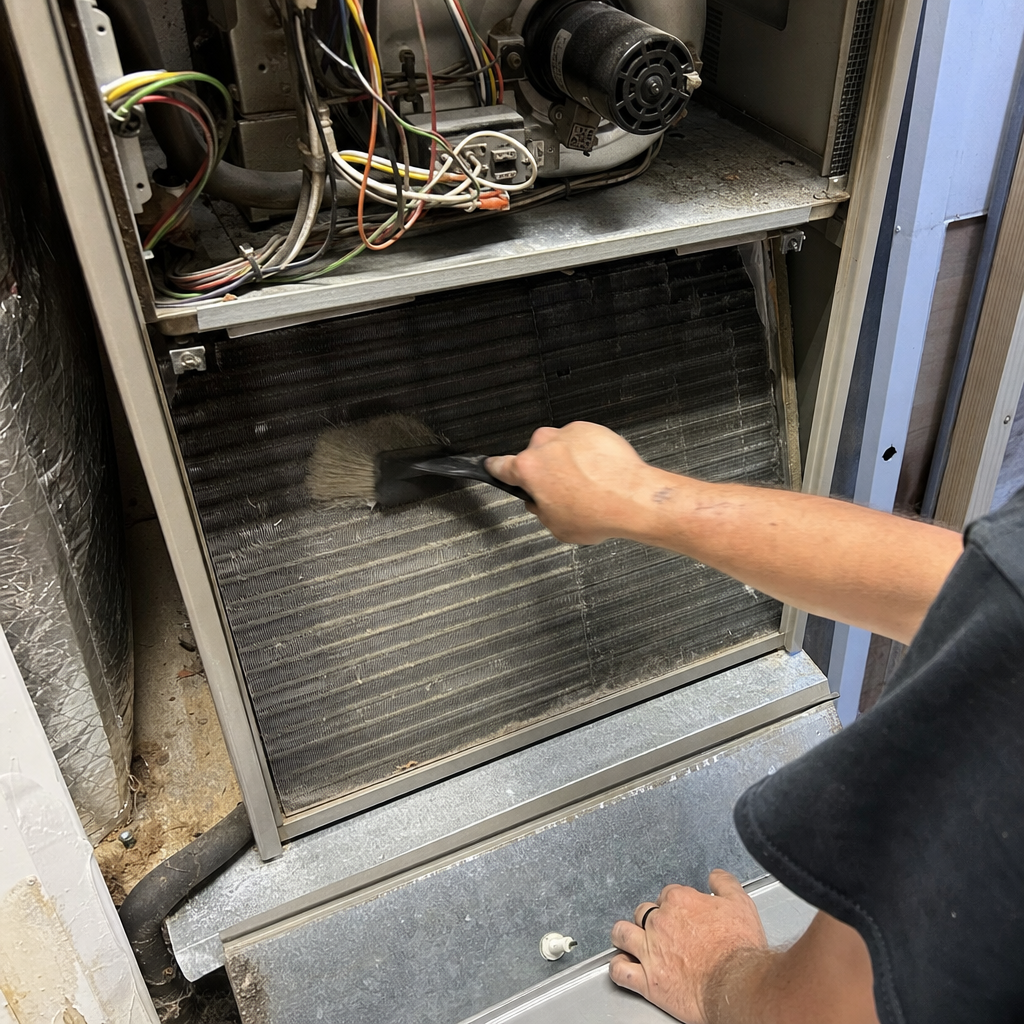
Fast, Reliable HVAC Cleaning Across Harrison
HVAC cleaning in Harrison, OH typically costs $180–$450 depending on which components need service, and most jobs are completed same-day when you call before noon. If your system is blowing warm air, making noise, or cycling constantly through a Harrison summer, dirty coils or a clogged blower are usually the cause — and they’re fixable without a full replacement.
We’re Matrix Air Duct & Vent Cleaning Ohio, and our HVAC Cleaning team has been handling calls in Harrison since we started serving the west-side Cincinnati corridor 11 years ago. Joseph Taylor, our owner, still runs every job personally. That means when you call (833) 991-6689, the person who answers is the same person who’ll be in your basement or utility room with a Rotobrush in hand — not a dispatcher sending a subcontractor you’ve never met.
We know Harrison’s housing stock. The post-war ranches along Elm Street, the bungalows near Washington Street in 45030, the split-levels off New Haven Road — these homes weren’t built for modern HVAC loads, and their undersized return ducts create cleaning challenges that franchise crews with one-size-fits-all equipment often miss. We carry Nikro and Abatement Technologies gear sized for residential systems, and we adjust our approach for the tighter ductwork we regularly encounter here.
Why Matrix Air Duct & Vent Cleaning Ohio Is Harrison’s Preferred HVAC Cleaning Company
Our reputation in Harrison is built on showing up and doing the work ourselves. Joseph Taylor has 227 verified reviews averaging 4.8 stars — not from a one-time promotional push, but from 11 years of homeowners watching him clean their systems start to finish. Harrison customers specifically mention in their feedback that they appreciated having the owner on the job, explaining what he found and why it mattered.
Response time to Harrison is typically under 90 minutes from call to arrival when we’re already west of Cincinnati. We’re not routing from a central dispatch hub in Columbus for these calls — we maintain active scheduling in the Harrison, Bright, and Bridgetown corridor specifically. That matters when your evaporator coil is icing up on a 92-degree July afternoon and your house is climbing past 80 inside.
We also understand the local conditions that affect your system. Harrison sits in the path of limestone dust from regional quarry operations — fine particulate that infiltrates blower wheels and condenser fins over time. Generic duct cleaners who don’t account for this debris type often leave systems partially clogged. We’ve cleaned enough Harrison blowers to recognize the telltale white-gray buildup and know which brushes and negative-pressure settings remove it without damaging components.
Our HVAC Cleaning Services in Harrison
Evaporator Coil Cleaning
Harrison’s older housing stock, much of it built in the post-war boom, often has undersized return ducts that get choked with drywall dust and insulation debris over decades, causing evaporator coils to ice up in summer. When airflow drops below 350 CFM per ton, the coil temperature falls below freezing and ice builds — then melts, then refreezes, warping fins and eventually requiring replacement. We clean coils in-place when possible using foaming cleaners and low-pressure rinses that won’t bend aluminum fins. For heavily fouled systems in Harrison’s smaller ranches, we’ll pull the coil if access allows and clean it on a workbench for thoroughness.
Blower Cleaning
The blower wheel is the heart of air movement, and in Harrison it’s working against limestone dust that other Cincinnati suburbs don’t see at the same concentrations. This fine, abrasive material clings to blower vanes, throwing the wheel off balance and causing motor vibration, bearing wear, and premature failure. We remove the blower assembly, clean the wheel and housing with compressed air and soft brushes, and check motor amp draw before reassembly. A clean blower in a Harrison home typically draws 15–20% less current — you’ll see that in your Duke Energy bill.
Condenser Cleaning
Your outdoor condenser coil in Harrison fights the same limestone dust plus cottonwood fluff from the mature trees in neighborhoods like the areas near Miami Whitewater Forest. We use foaming cleaner and a low-pressure wash from the inside out, never high-pressure spraying that can flatten fins. Clean condensers transfer heat 25–30% more efficiently, which means your compressor isn’t running overtime during those humid August stretches when Harrison hits the upper 80s.
Air Handler Cleaning
The air handler cabinet — the box that houses your blower, coil, and often your heat exchanger — collects debris that bypasses the filter. In Harrison homes with basement utility rooms, we’ve found everything from construction debris from 1960s renovations to active mold growth on damp insulation. We clean the cabinet interior, replace degraded insulation when needed, and verify drain pan function. A clean air handler means the air moving through your ducts isn’t picking up fresh contamination every cycle.
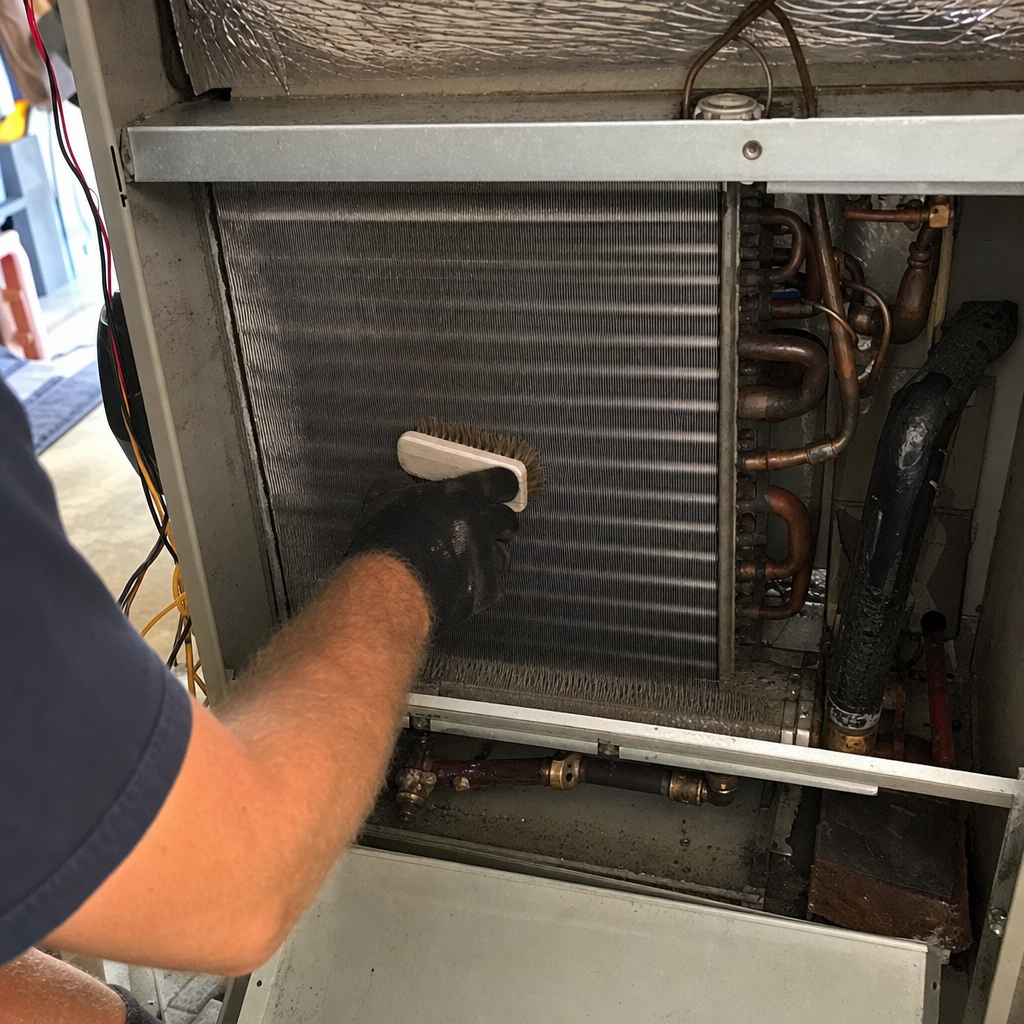
Heat Exchanger Cleaning
This is safety-critical work we don’t shortcut. Harrison’s dry winters mean natural gas burns hot and clean, but years of operation still leave soot and scale on heat exchanger surfaces — restricting heat transfer and, in worst cases, creating cracks that leak carbon monoxide into your supply air. We inspect with borescope cameras and clean only when the exchanger passes structural inspection. If we find damage, we’ll show you the image and recommend replacement before any cleaning proceeds. This isn’t a scare tactic; it’s what 11 years of owner-operated service has taught us about protecting Harrison families.
Coil Treatment
After cleaning, we offer antimicrobial treatment for evaporator coils using products compatible with Aprilaire and Honeywell whole-house systems. This isn’t a perfume mask — it’s a bonded treatment that inhibits mold and bacterial growth for 6–12 months. In Harrison’s humid summer basements, where utility rooms often lack adequate dehumidification, this treatment prevents the musty re-growth that otherwise starts within weeks of a basic cleaning.
What happens when you call
- 1
A real person answersNo phone trees — you reach a local pro.
- 2
You get an upfront price rangeHonest numbers before anyone is dispatched.
- 3
A background-checked tech heads outLicensed & insured, dispatched right away.
- 4
You approve before work beginsNothing starts until you say go.
Trusted Brands We Service in Harrison
We clean systems carrying Carrier, Trane, Lennox, Rheem, Goodman, and Bryant — the brands we see most often in Harrison’s 1950s–1980s housing stock. We also service and work around Aprilaire and Honeywell whole-house air purifiers and humidifiers, which are common upgrades in this market. Our Rotobrush and Nikro equipment is sized for residential ductwork, not industrial applications that would damage your system. For sanitizing, we stock treatments compatible with the IAQ components we encounter, so Harrison customers don’t wait days for special-order products.
Common HVAC Cleaning Problems We See in Harrison Homes
- Evaporator coils icing from neglected dust buildup in smaller Harrison homes, especially post-war ranches with undersized ductwork. The restricted airflow creates a pressure drop that starves the coil, and once ice forms, it compounds the blockage. We see this most often in homes near Elm Street and the surrounding 45030 blocks where original ductwork was never upgraded.
- Blower wheels clogged with fine limestone dust from nearby quarry operations, throwing off balance and causing motor vibrations. This isn’t generic household dust — it’s calcium carbonate particulate that’s harder and more abrasive. Left uncleaned, it destroys blower bearings and requires full motor replacement.
- Heat exchanger fouling from years of burning natural gas in dry-winter conditions, leading to carbon monoxide risks if not cleaned and inspected. Harrison’s heating season runs November through March with furnaces cycling hard. Soot accumulation insulates the metal, causing it to run hotter and fatigue faster.
- Condenser coils choked with cottonwood seed and grass clippings in homes near greenbelts and the Miami Whitewater Forest perimeter. These blockages raise head pressure and compressor amp draw, shortening system life and spiking summer electric bills.
Pricing for HVAC Cleaning in Harrison, OH
| Service | Typical Range in Harrison |
|---|---|
| Evaporator Coil Cleaning | $180–$280 |
| Blower Cleaning | $150–$220 |
| Condenser Cleaning | $120–$180 |
| Air Handler Cleaning | $200–$320 |
| Heat Exchanger Cleaning + Inspection | $180–$260 |
| Full System Cleaning (coil, blower, condenser) | $380–$450 |
What moves you within these ranges? Accessibility matters — a coil behind a tight basement stairwell in a Harrison bungalow takes longer than one in an open utility room. Contamination level matters — a blower with two years of limestone buildup versus ten. We price by the job after inspection, not by the hour, so you’re not watching a clock. Every estimate is free, and we’ll show you what we found before any work starts. Call (833) 991-6689 for exact pricing on your Harrison system.
We Also Serve Cities Near Harrison
Our service radius from the west Cincinnati corridor includes Bright, Bridgetown, Dent, and Mack — the same owner-operated service, the same equipment, the same day. If you’re in Harrison township or just outside 45030, call and we’ll confirm coverage.
Serving Harrison, OH — Our Local Coverage Area
We’re based in the Harrison area and know this community well. Use the map below to see our service coverage — if you’re nearby, we can almost certainly help.
FAQs — HVAC Cleaning in Harrison
Every 2–3 years for most Harrison homes, versus the 3–5 year standard for other Cincinnati suburbs. The limestone dust is finer and more persistent than typical household particulate, and it accumulates in blower wheels and condenser coils faster than organic dust alone. If you live near active quarry operations or downwind of major transport routes, annual condenser cleaning is worth considering. Call (833) 991-6689 and we’ll assess your specific exposure.
Yes, and we specialize in the tighter access these homes present. The post-war ranches in Harrison’s 45030 core often have coils in small basement closets or crawlspace-mounted air handlers with 18-inch clearances. We use flexible-shaft brushes and foaming cleaners that work in confined spaces, and we never force tools where they don’t fit. Joseph Taylor has cleaned dozens of these exact configurations — he’ll tell you before starting if your access requires a different approach. Call (833) 991-6689 for a free look.
Yes, if the smell is coming from microbial growth on the coil, in the drain pan, or on air handler insulation — which it usually is in Harrison basements. Cleaning removes the organic material that feeds odor, and our optional coil treatment prevents regrowth. If the smell persists after cleaning, it may indicate a drainage issue or foundation moisture problem that needs separate attention. We’ll tell you which it is before we quote any additional work. Call (833) 991-6689 to schedule.
Usually yes, if you call before noon and we’re already scheduled in the Harrison area. Same-day availability is one advantage of our owner-operated model — Joseph Taylor adjusts his route directly rather than routing through a dispatch center. Warm-air calls get priority because we know what a failed cooling system means in a Harrison July. Call (833) 991-6689 now; if we can’t make today, we’ll give you a firm tomorrow morning slot.
No — we select coil treatments and sanitizers specifically for compatibility with Aprilaire, Honeywell, and similar IAQ components. The bonded antimicrobial we use is EPA-registered for use in occupied spaces and won’t degrade electronic air cleaner cells or media filters. If you have an Aprilaire 5000 or similar installed, we’ll note it before treatment and adjust our product selection accordingly. Call (833) 991-6689 and mention your model when booking.
Written by Joseph Taylor, Owner at Matrix Air Duct & Vent Cleaning Ohio, serving Harrison and the greater Cincinnati area since 2013.